By Dave “Macca” MacIntyre | Senior Field Technician & Site Trainer
A common Monday morning phone call I get from operators often starts the exact same way:
“Macca, these new shoes are stuffed. Machine’s running full throttle, but I’m barely cutting a millimeter off this slab.”
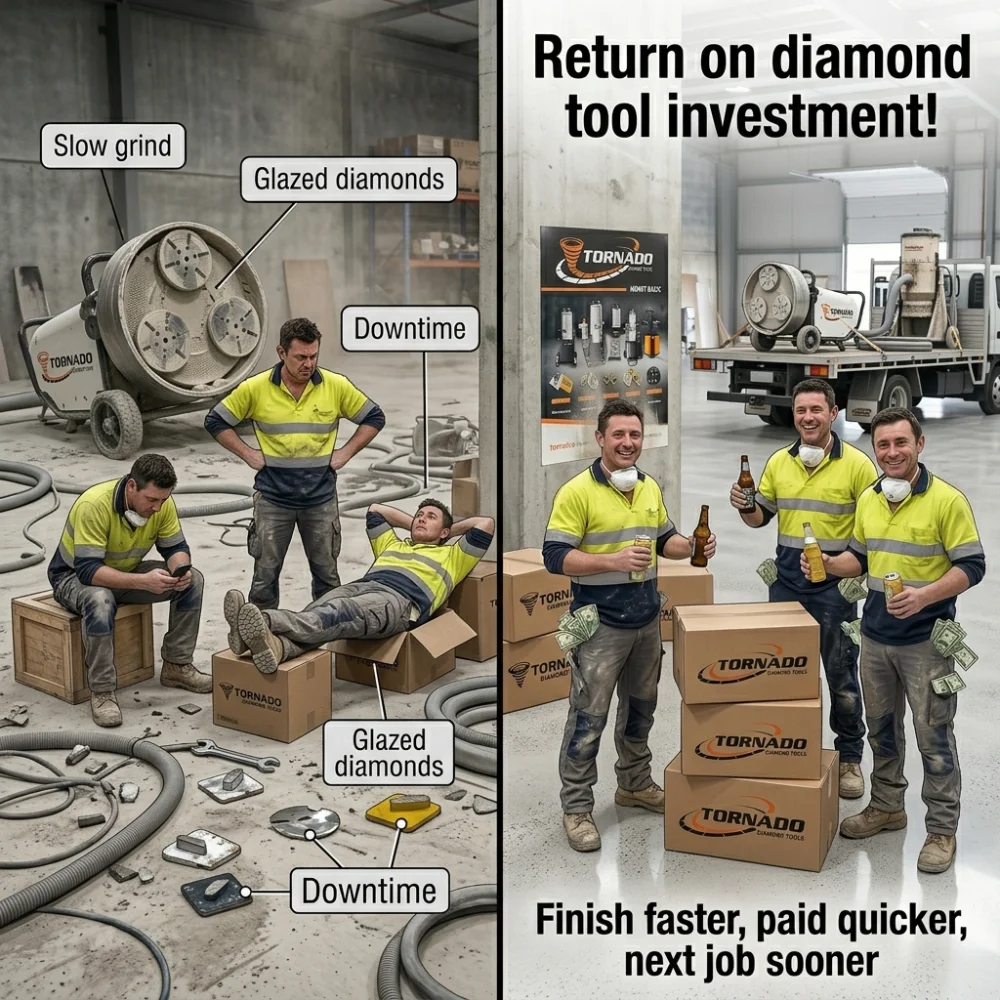
Nine times out of ten, the tooling isn’t faulty at all. What’s actually happened is the segments have glazed over.
When you’re running heavy planetary gear day-in, day-out, glazing is just part of life—especially with how hard and burnished Australian slabs are poured these days. Here is what I look for when a head stops biting on site, and how I get a crew moving again in under a minute without throwing away good diamond.
What Glazing Looks Like on the Ground
Grinding works on a simple balance: concrete dust acts like sandpaper against the metal head, wearing it down just fast enough to expose fresh, sharp synthetic diamonds.
If the concrete is super-hard or power-troweled, there’s no loose grit in the dust to scour that metal away. The diamonds flatten off, the metal surrounding them stays intact, and suddenly you’re trying to grind high-PSI concrete with a smooth block of steel.
When I walk up to a machine on site, here are three things that tell me straight away the shoes are glazed:
- The vacuum goes quiet: You’ll hear the motor humming, but the heavy dust drop into the extractor bag drops off to almost nothing.
- The machine starts “skating”: The head floats across the slab with zero traction. It feels light in your hands because there’s no mechanical grip.
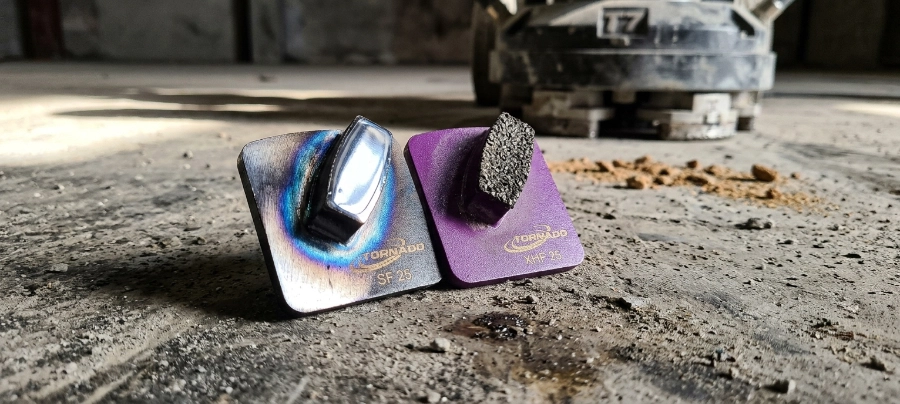
- The segment looks like polished chrome: Tilt the machine back and run your thumb across the segment face (after it’s cool!). If it feels smooth as glass and looks shiny, it’s glazed.
My 30-Second Field Dressing Trick
If your segments are glazed, don’t pull the shoes off and don’t panic. You just need to strip that smooth outer layer of metal to bring the next layer of sharp grit to the surface.
Here’s how I dress them right on the job:
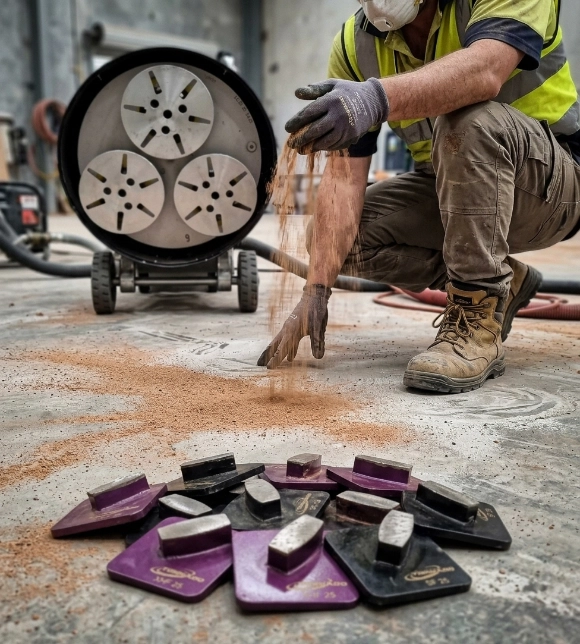
- The Sand Trick: Grab a couple of handfulls of coarse brickies sand or raw grit and scatter it directly in front of the grinder path. Lower the head and run over it at low RPM for 15 to 20 seconds. That loose sand acts like an abrasive grinding compound and strips the metal matrix open instantly. Add a light mist of water to create a slightly damp slurry.
- Find a Rough Patch: If you don’t have loose sand, run the machine over a piece of unsealed, rain-damaged, or green concrete nearby—even an outdoor edge or apron. A few passes over abrasive concrete will open the segments right back up.
- Keep a Dressing Block in the Ute: A cheap silicon carbide dressing brick kept in your kit box will save your bacon when you’re stuck inside a clean commercial site with no loose dirt around.
How I Stop It Happening on the Next Pass
Dressing gets you out of a spot, but if you’re stopping to dress every ten minutes, your bond is wrong for the slab.
Rule of thumb on site is simple: Hard slab = Soft bond.
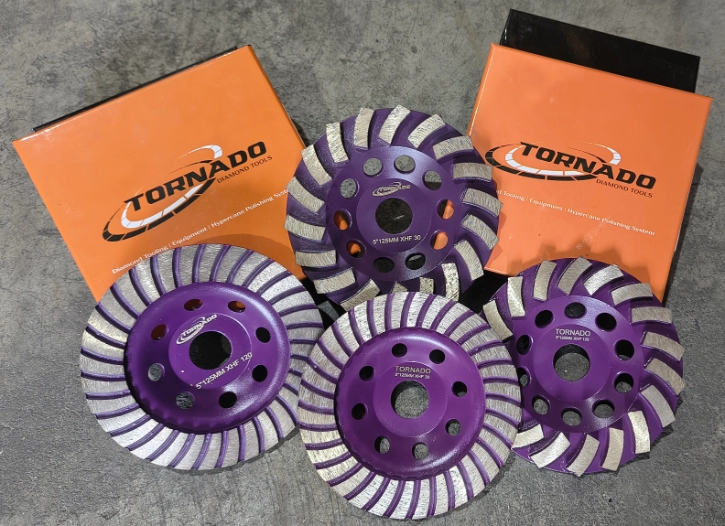
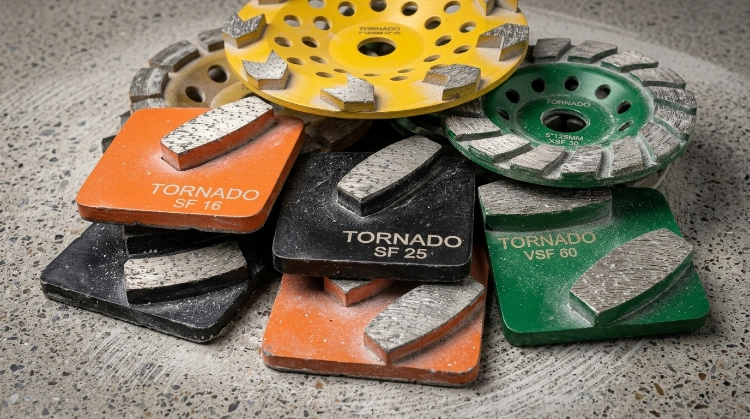
If you’re on a hard slab, you need a soft matrix (like Tornado’s XHF Purple or XXHF Grey) engineered to wear away under heat and keep exposing sharp diamonds. You can also knock your machine speed down 200–300 RPM. Lowering the RPM forces the machine’s head weight onto the diamond points rather than letting them ride over the surface and polish it, and generates less heat on the segment. On extremely dense concrete add an abrasive medium like a handful of silica sand or coarse concrete dust directly in front of the grinding path. The loose grit acts as an abrasive compound, keeping the matrix open. Mist a bit.of water over it to create a damp slurry and contain the dust.
Catch it early, dress it quick, and get back to making square meters.
Stop Fighting Your Tooling
Glazed segments aren’t broken—they’re just waiting for fresh grit to be exposed. Knowing how to spot glaze early and clear it in 30 seconds keeps your crew moving, protects your machinery, and saves you from wasting money on premature tool replacements.
Tired of constantly dressing glazed shoes on hard concrete? Upgrade your tooling setup with Tornado Diamond Tools‘ soft-bond matrix shoes—engineered specifically for Australian extra-hard substrates to maintain an aggressive, continuous cut from first pass to final profile.
Got a tough slab giving your crew grief this week? Drop your site details in the comments or give the Tornado tech team a call—we’ll help you match the right bond to the floor.