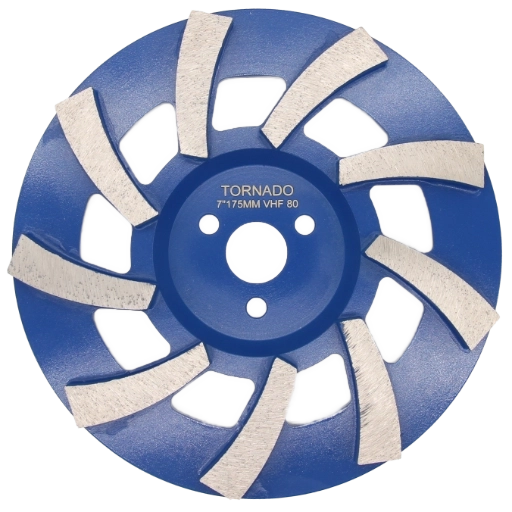
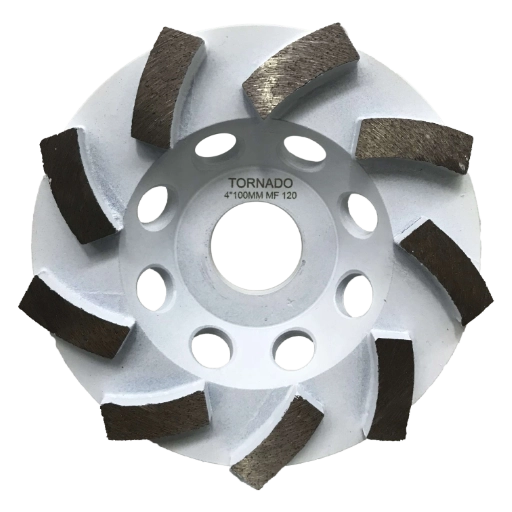
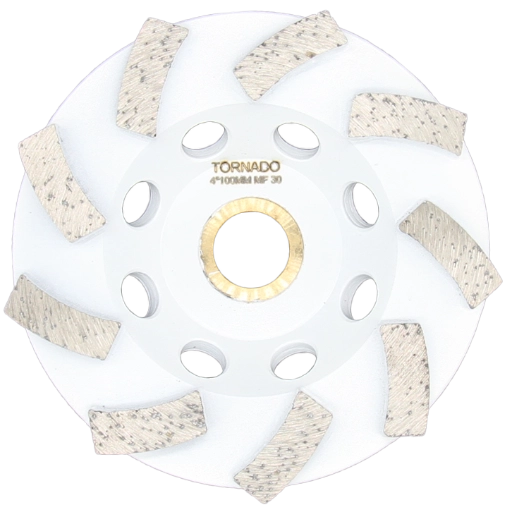
Choosing the right diamond grit is an important part of concrete grinding. Grit affects how aggressively the tooling removes material, how quickly the surface changes and the type of finish left behind.
Using a grit that is too coarse can remove more material than necessary, while starting too fine can make the grinding process slow and inefficient.
The best result usually comes from matching the grit to both the condition of the concrete and the stage of the grinding process.
What Does Diamond Grit Mean?
Diamond grit refers to the approximate size of the diamond particles used in the grinding segment.
Lower grit numbers generally indicate larger, more aggressive diamond particles. Higher grit numbers generally indicate smaller diamond particles that remove less material and leave a finer finish.
This means that a lower grit number is normally used earlier in the process, while progressively higher grits may be used as the surface is refined.
A simple way to think about grit is: lower numbers remove material faster, while higher numbers refine the surface.
When Should You Use a Coarse Grit?
Coarse diamond grits are used when material removal is the main priority.
Typical applications can include:
- Removing surface imperfections
- Levelling high spots
- Initial concrete grinding
- Removing laitance
- Preparing rough or uneven surfaces
- Beginning a multi-stage grinding process
Coarse tooling cuts more aggressively and can reduce the amount of time required to establish a flat and consistent surface.
However, it will usually leave more visible scratch patterns than finer tooling, so additional grinding stages may be required where a smoother finish is needed.
What Is Considered a Coarse Grit?
Exact grit ranges can vary between manufacturers, but coarse grinding commonly begins with lower grit numbers such as 16, 20, 30 or similar specifications.
Very low grits are generally selected for demanding material removal, while slightly higher coarse grits can be used where a balance between removal rate and surface finish is required.
The correct starting point depends on the condition of the floor and how much material needs to be removed.
When Should You Use a Medium Grit?
Medium grits are often used after the initial aggressive grinding stage.
Their purpose is to remove the deeper scratch pattern left by coarse tooling and begin refining the surface.
Medium-grit tooling can also be useful for general-purpose grinding where extreme material removal is not required.
Typical applications include:
- Refining a surface after coarse grinding
- General concrete preparation
- Reducing visible grinding marks
- Preparing the floor for finer tooling
When Should You Use a Fine Grit?
Fine diamond grits are used when surface refinement becomes more important than aggressive material removal.
As the grit number increases, the diamond particles become smaller and the scratch pattern becomes finer.
Fine-grit tooling may be used when:
- A smoother concrete finish is required
- The floor is being prepared for polishing
- Scratch marks from previous stages need to be reduced
- Only light surface refinement is required
Fine tooling removes less material, so it is generally not the best choice for correcting significant surface irregularities.
Why Grit Progression Matters
In many grinding and polishing applications, the surface is refined through a sequence of progressively finer grits.
Each stage removes or reduces the scratch pattern left by the previous stage.
For example, a process might begin with an aggressive coarse grit, move to a medium grit and then continue into finer tooling as the desired finish is approached.
Skipping too many grit stages can leave scratches that the next tool struggles to remove efficiently.
Why Not Start With a Fine Grit?
Starting with a grit that is too fine can make the grinding process unnecessarily slow.
If the floor has high spots, heavy surface contamination or significant imperfections, fine tooling may spend a long time trying to achieve work that a coarse tool could complete much more efficiently.
This can increase machine time, labour cost and wear on the tooling.
The goal is to use the most appropriate grit for the amount of material that needs to be removed.
Factors That Affect Grit Selection
How Much Material Needs to Be Removed?
Before choosing the grit, consider the condition of the floor.
If the surface has major imperfections or substantial material needs to be removed, a coarse grit will generally be more efficient.
If the concrete is already relatively flat and only requires light preparation, a less aggressive starting grit may be appropriate.
The aim is to avoid both over-grinding and unnecessary machine time.
Does Concrete Hardness Affect Grit Selection?
Concrete hardness and diamond grit are separate factors, but both affect tool performance.
The grit determines the size of the diamond particles and therefore how aggressively the surface is cut.
The bond controls how those diamonds are exposed as the tooling wears.
This means that you need to consider both:
- The correct grit for the grinding stage
- The correct bond for the hardness and abrasiveness of the concrete
A suitable grit paired with the wrong bond may still perform poorly.
What Happens When You Choose the Wrong Grit?
What Happens If the Grit Is Too Coarse?
If the grit is more aggressive than the application requires, it can leave deep scratch patterns and remove more concrete than necessary.
This may create additional work because more grinding stages are then required to refine the surface.
For light preparation or finishing work, an unnecessarily coarse tool can therefore reduce overall efficiency.
What Happens If the Grit Is Too Fine?
If the grit is too fine, the tooling may struggle to remove surface defects or significant material.
You may notice:
- Slow grinding progress
- More machine passes than expected
- Difficulty removing previous scratch patterns
- Longer project times
Moving to a coarser grit may allow the machine to complete the initial work more efficiently before returning to finer tooling.
A Simple Diamond Grit Guide
- Coarse grit: Aggressive material removal, levelling and initial grinding.
- Medium grit: General grinding and refinement after coarse tooling.
- Fine grit: Surface refinement and preparation for finer finishing or polishing stages.
The exact grit sequence will depend on the tooling system, the concrete and the required finish.
Choosing the Right Starting Grit
Before selecting your starting grit, consider:
- The current condition of the floor
- How much material needs to be removed
- The finish required
- Whether additional grinding stages will follow
- The hardness and abrasiveness of the concrete
- The grinding machine being used
The correct starting grit should remove the required material efficiently without creating unnecessary additional work later in the process.
Choose Grit Based on the Grinding Stage
There is no single diamond grit that is correct for every concrete grinding job.
Coarse grits are best suited to aggressive material removal, medium grits help refine the surface, and finer grits are used as the desired finish becomes more important.
Combining the appropriate grit with the correct bond and grinding equipment can improve productivity, reduce unnecessary wear and produce a more consistent surface.
If you are unsure which grit is best suited to a particular project, speak with an authorised Tornado reseller about the condition of the concrete, the grinding stage and the finish you need to achieve.