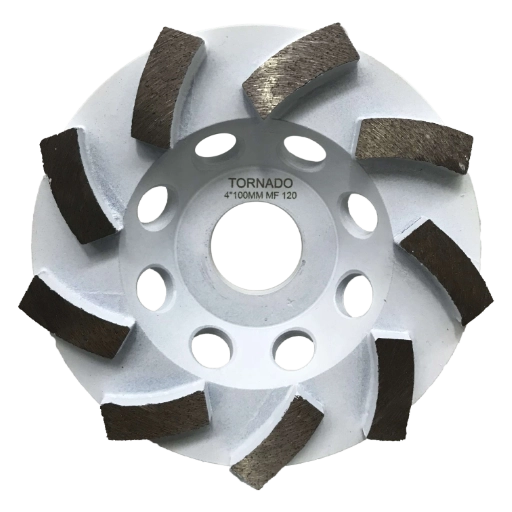
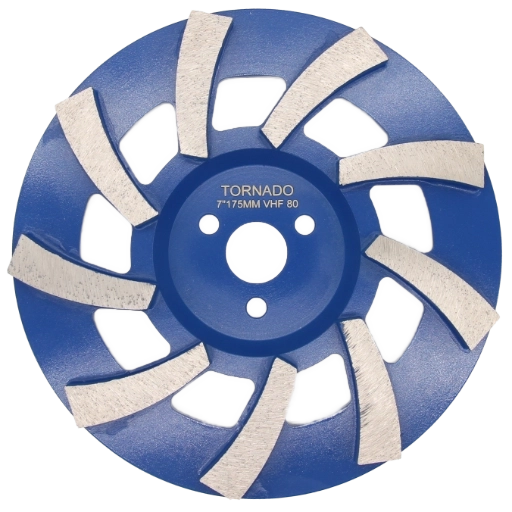
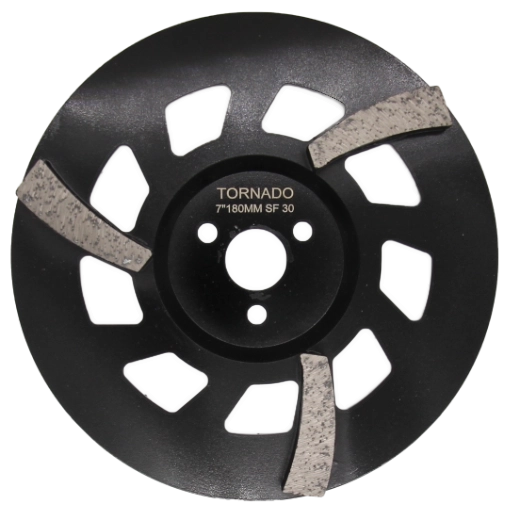
Choosing the correct bond is one of the most important parts of selecting diamond tooling for concrete grinding. The wrong bond can result in slow cutting, glazing, excessive wear and unnecessary downtime, while correctly matched tooling can improve productivity and help maximise tool life.
One of the most common sources of confusion is that hard concrete will often require a softer-bond diamond tool, while softer or more abrasive concrete generally requires a harder bond.
Understanding why this happens makes choosing the right tooling much easier.
What Is the Bond in a Diamond Tool?
The diamond particles in a grinding tool are held within a metal matrix known as the bond.
As the tool grinds concrete, the exposed diamonds gradually wear and become less effective. At the same time, the surrounding bond must also wear away so that fresh diamond particles are continually exposed.
The ideal balance is for the bond to wear at a rate that keeps sharp diamonds available without allowing the segment itself to wear unnecessarily quickly.
How Hard and Soft Diamond Bonds Work
What Is a Hard-Bond Diamond Tool?
A hard-bond tool uses a metal matrix designed to wear relatively slowly.
This can be particularly useful when grinding softer or more abrasive concrete. Abrasive material naturally wears the bond quickly, so a harder bond helps prevent the segment from disappearing too rapidly.
If a soft-bond tool is used on very abrasive concrete, the diamonds may continue cutting effectively but the surrounding metal matrix can wear away too quickly, significantly reducing tool life.
What Is a Soft-Bond Diamond Tool?
A soft-bond diamond tool is designed so that the metal matrix wears more readily.
This is particularly important when working on very hard concrete. Hard concrete may not abrade the metal bond quickly enough, which can leave worn or rounded diamonds trapped at the surface of the segment.
A softer bond allows the matrix to wear away and expose fresh, sharp diamonds more readily.
A simple rule to remember is: hard concrete generally needs a softer bond, while softer abrasive concrete generally needs a harder bond.
Matching the Bond to Concrete Hardness
Why Does Hard Concrete Need a Soft Bond?
At first, the relationship can sound backwards. It might seem logical that a harder surface should require a harder tool.
However, the bond is not primarily about matching the hardness of the concrete. Its job is to control how quickly fresh diamonds are exposed.
Very hard concrete does not wear the metal matrix aggressively. If the bond is too hard, the worn diamonds can remain trapped in the segment rather than being released.
The result can be a condition commonly referred to as glazing, where the tool begins sliding across the concrete rather than grinding it effectively.
A softer bond helps prevent this by wearing away more readily and exposing fresh diamonds.
Why Does Soft Concrete Need a Hard Bond?
Softer concrete can often be much more abrasive than hard concrete.
As the tool moves across an abrasive surface, the concrete can rapidly wear the metal matrix surrounding the diamonds.
If the bond is too soft, the segment can wear away before the diamonds have delivered their full useful cutting life.
A harder bond slows this process and helps provide a better balance between grinding performance and tool life.
How Can You Tell Whether Concrete Is Hard or Soft?
Concrete hardness is not always obvious from appearance alone. Two slabs that look almost identical can behave quite differently during grinding.
Factors that can influence the surface include:
- Concrete mix design
- Aggregate type
- Age of the slab
- Curing conditions
- Surface treatments
- Previous coatings or processes
Professional contractors may use concrete hardness testing methods before choosing tooling, particularly on larger projects where selecting the wrong bond can significantly affect productivity.
Tool behaviour during the initial grinding stages can also provide valuable information.
How to Recognise Incorrect Bond Selection
Signs That Your Bond Is Too Hard
If the bond is too hard for the concrete, the tool may not expose fresh diamonds quickly enough.
Possible signs include:
- Grinding speed becomes unusually slow
- The tool appears to slide rather than cut
- Segments become smooth or glazed
- The machine requires more pressure to maintain cutting
- Tool wear appears extremely low but productivity is poor
Very low wear is not always a good sign. A tool that lasts a long time but barely cuts is not providing useful productivity.
Signs That Your Bond Is Too Soft
If the bond is too soft for the material, the segment can wear excessively quickly.
Typical signs can include:
- Rapid loss of segment height
- Acceptable grinding speed but poor tool life
- Frequent tooling replacement
- Higher-than-expected tooling cost for the area completed
In this situation, moving to a harder bond may help control wear while maintaining effective grinding performance.
Bond Selection Is About Balance
The goal is not simply to find the longest-lasting diamond tool or the most aggressive one.
Effective tooling provides an appropriate balance between:
- Grinding speed
- Diamond exposure
- Segment wear
- Machine productivity
- Overall tooling cost
The best-performing tool is usually the one that completes the work efficiently while wearing at a controlled and predictable rate.
Other Factors That Can Affect Tool Performance
Bond hardness is important, but it is not the only factor affecting concrete grinding performance.
You should also consider:
- Diamond grit
- Segment shape and size
- Machine weight and power
- Grinding speed
- Number of segments in contact with the floor
- Wet or dry grinding conditions
- The type of surface coating or contamination present
Changing one of these factors can affect how the tooling behaves, even when the bond itself is appropriate.
Choosing the Right Bond for the Job
What If You Are Unsure Which Bond to Use?
If the hardness of the floor is unknown, selecting tooling can require some initial testing.
Begin with tooling that is appropriate for the expected concrete hardness and monitor its performance carefully during the first part of the job.
If the tool begins glazing and cutting performance drops, a softer bond may be required. If segment wear is excessively rapid, a harder bond may provide better tool life.
For larger projects, identifying the concrete hardness before beginning can help reduce trial and error.
Hard Bond vs Soft Bond: A Simple Guide
- Very hard concrete: Generally use a softer bond.
- Medium concrete: Use tooling designed for medium-hardness floors.
- Soft or abrasive concrete: Generally use a harder bond.
Exact bond classifications can vary between tooling ranges, so always check the manufacturer’s recommendations for the specific diamond tool being used.
Correct bond selection can make a significant difference to concrete grinding performance. The bond must wear quickly enough to expose fresh diamonds while remaining durable enough to provide useful segment life.
Remember the basic relationship: harder concrete generally requires a softer bond, while softer and more abrasive concrete generally requires a harder bond.
If you are unsure which bond is best suited to a particular floor, speak with an authorised Tornado reseller about the concrete, grinding machine and application. Correct tooling selection can help improve productivity, reduce unnecessary wear and achieve a more consistent result.