Choosing the right diamond blade for concrete cutting can have a major impact on cutting speed, blade life and the quality of the finished cut. Concrete varies considerably in hardness, abrasiveness and composition, so a blade that performs well on one project may not be the best choice for another.
Understanding the material being cut, the equipment being used and the type of cut required will help you select a diamond blade that performs efficiently and delivers consistent results.
How Does a Diamond Blade Cut Concrete?
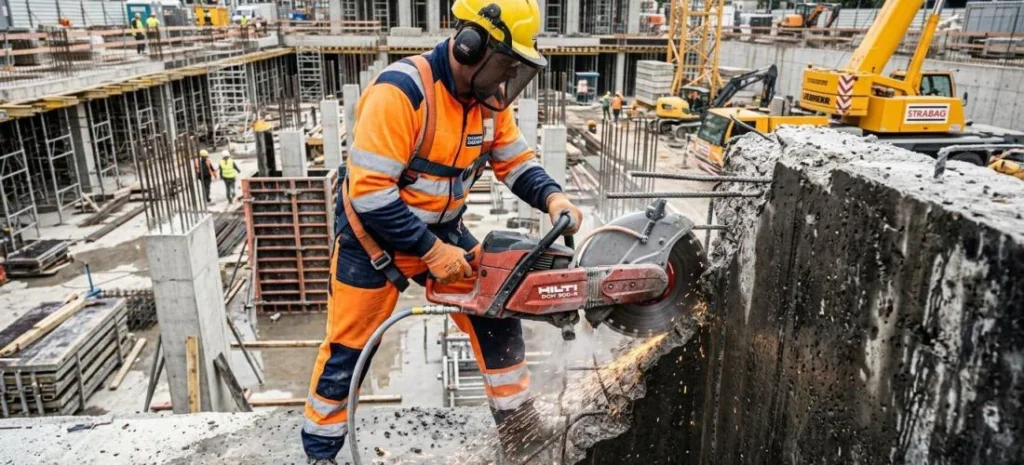
A diamond blade uses industrial diamonds held within metal segments around the edge of the blade. As the blade rotates through the material, exposed diamonds grind and cut the concrete while the metal bond gradually wears away to expose fresh diamond particles.
This relationship between the diamonds and the bond is one of the most important factors affecting blade performance.
A correctly matched blade should expose fresh diamonds at an appropriate rate while maintaining enough segment life to complete the work efficiently.
Match the Blade to the Concrete
Start With the Material You Are Cutting
Before choosing a blade, identify exactly what you will be cutting. Concrete is not a single uniform material, and its characteristics can vary significantly between projects.
Consider factors such as:
- Concrete hardness
- Aggregate type and hardness
- Age of the concrete
- Presence of reinforcing steel
- How abrasive the material is
- The depth and length of the cut
These characteristics affect how quickly the blade cuts and how rapidly the diamond segments wear.
Hard Concrete and Soft Concrete Require Different Bonds
The hardness of the concrete influences the type of bond that should be used in the blade’s diamond segments.
As a general principle, harder concrete often requires a softer bond, while softer and more abrasive concrete typically requires a harder bond.
When cutting hard concrete, a softer bond helps the segment wear at a rate that continually exposes fresh diamonds. If the bond is too hard, the blade may glaze and cutting performance can slow considerably.
When cutting softer or highly abrasive concrete, a harder bond can help prevent the segment from wearing away too quickly.
This is why simply choosing the hardest or longest-lasting blade is not necessarily the best approach. The blade needs to be matched to the material.
Consider the Aggregate
The aggregate inside concrete can also have a significant effect on diamond blade performance.
Hard aggregates place greater demands on the exposed diamonds and may slow the cutting process. Softer or more abrasive materials can cause the metal bond to wear more rapidly.
If you regularly work within a particular region or with a particular type of concrete, understanding the typical aggregate can make blade selection considerably easier.
Are You Cutting Reinforced Concrete?
Many concrete structures contain reinforcing steel. If there is a possibility that the blade will encounter reinforcement during the cut, choose a blade designed for reinforced concrete applications.
Cutting through steel places additional stress on both the diamond segments and the cutting equipment. A blade that performs well in plain concrete may not provide the same performance when repeatedly cutting through reinforcement.
Knowing whether reinforcing steel is present before starting the job can help you select the appropriate blade and equipment.
Match the Blade to the Cutting Method and Machine
Wet Cutting or Dry Cutting?
Wet Cutting
Water helps cool the blade and can reduce airborne dust during cutting. Wet cutting is commonly used with larger saws and for demanding or continuous cutting applications.
Cooling the blade can also help maintain consistent performance when carrying out longer or deeper cuts.
Dry Cutting
Dry cutting is often used with handheld equipment where water cannot practically be introduced to the work area.
Dry-cutting blades are designed to manage heat differently, but the blade should still be allowed to cool appropriately during use. Always follow the blade and equipment manufacturer’s operating instructions.
Choose the Correct Blade Diameter
The blade must be compatible with the machine being used.
Before fitting a diamond blade, check:
- Blade diameter
- Arbor or bore size
- Maximum operating speed
- Required cutting depth
- Machine power
- Guard compatibility
Never fit a blade to a machine that exceeds the blade’s stated maximum operating speed.
Consider Blade Design and Overall Productivity
Segment Design Can Affect Performance
Diamond blades are available with different segment configurations designed for different cutting characteristics.
Segment design can influence:
- Cutting speed
- Cooling
- Debris removal
- Segment life
- The smoothness of the cut
An aggressive blade may be ideal where productivity is the priority, while other applications may require greater control or a cleaner finished edge.
The best choice depends on the material and the result required.
Don’t Choose a Blade Based on Price Alone
The lowest purchase price does not necessarily mean the lowest cutting cost.
A blade that cuts slowly, wears rapidly or requires frequent replacement can ultimately cost more in labour and downtime than a blade better matched to the application.
When comparing diamond blades, consider overall productivity rather than simply the initial cost.
This includes:
- Cutting speed
- Blade life
- Number of cuts completed
- Downtime for blade changes
- Quality of the finished cut
Monitor Blade Performance During Cutting
Once cutting begins, the behaviour of the blade can provide useful information about whether it is correctly matched to the material.
If cutting speed drops significantly, the blade begins to glaze or excessive heat develops, the bond may not be appropriate for the material or the cutting setup may need to be reviewed.
Likewise, unusually rapid segment wear may indicate that the blade is too soft for the material being cut.
Rather than forcing a poorly performing blade through the material, reassess the application and determine whether a different specification would provide better results.
Choosing the Right Diamond Blade for the Job
Diamond Blade Selection Checklist
Before selecting a blade for concrete cutting, ask:
- What type of concrete am I cutting?
- How hard and abrasive is the material?
- What aggregate is present?
- Is the concrete reinforced?
- Will the cutting be wet or dry?
- What machine will be used?
- What blade diameter and bore are required?
- How deep is the cut?
- Is cutting speed, blade life or finish the main priority?
There is no single diamond blade that is ideal for every concrete cutting application. The best performance comes from matching the blade specification to the concrete, cutting equipment and type of work being carried out.
Taking the time to consider concrete hardness, aggregate, reinforcement, bond and cutting method can improve productivity, extend blade life and produce a more consistent result.
If you are unsure which diamond blade is best suited to your application, speak with an authorised Tornado reseller for advice based on the material you are cutting, the equipment you are using and the result you need to achieve.