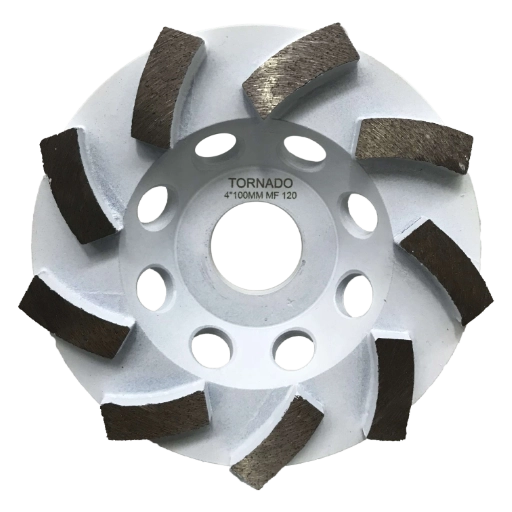
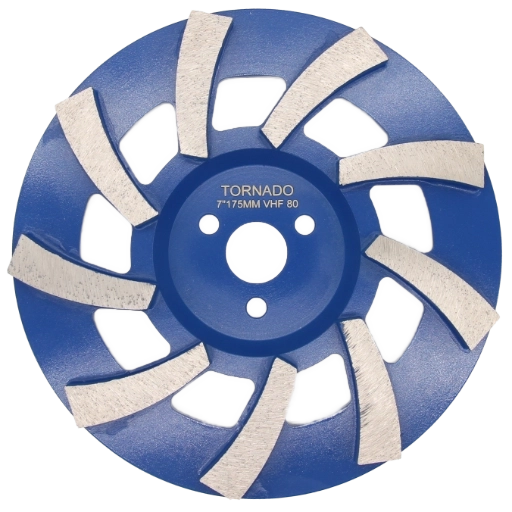
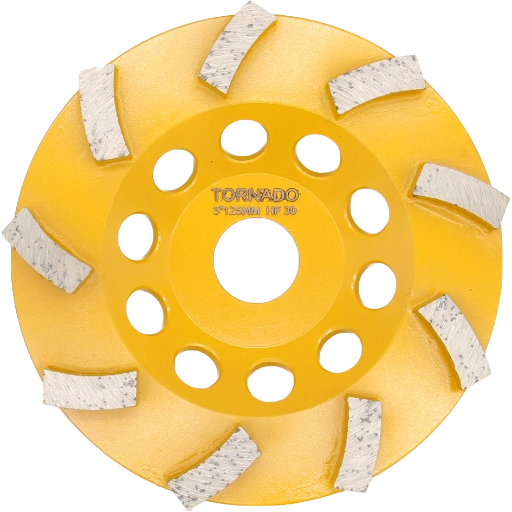
Choosing the right diamond cup wheel can make a significant difference to the speed, finish and efficiency of a concrete grinding job. With different bonds, grits and segment designs available, selecting the right wheel depends on both the material you are working with and the result you are trying to achieve.
Whether you are removing coatings, preparing a concrete floor or carrying out general surface grinding, understanding a few basic factors will help you select a cup wheel that performs effectively and provides the service life you expect.
What Is a Diamond Cup Wheel?
A diamond cup wheel is a grinding tool designed primarily for working with concrete, masonry and other hard mineral surfaces. Diamond segments are positioned around the wheel and progressively remove material as the wheel rotates.
Cup wheels are commonly fitted to handheld angle grinders and are particularly useful for areas that larger floor grinding machines cannot easily reach.
Typical applications include:
- Concrete surface preparation
- Removing coatings and surface contaminants
- Levelling uneven concrete
- Grinding high spots and joints
- Edge grinding
- General concrete clean-up
Match the Cup Wheel to the Concrete
One of the most important considerations when choosing a diamond cup wheel is the hardness and abrasiveness of the concrete.
Concrete varies considerably. Two slabs that appear similar can behave very differently during grinding because of differences in aggregate, curing, age and the composition of the concrete.
The relationship between concrete hardness and the bond used in the diamond segment is particularly important.
The hardest concrete does not necessarily require the hardest diamond bond. The bond needs to wear at the correct rate so that fresh diamond particles continue to be exposed during grinding.
As a general principle, harder concrete often requires a softer bond, while softer or more abrasive concrete generally requires a harder bond.
A softer bond allows the matrix surrounding the diamonds to wear away more readily on hard concrete and continually expose fresh cutting points.
On softer or more abrasive concrete, a harder bond helps prevent the segment from wearing unnecessarily quickly.
Match the Cup Wheel to the Application
The next step is to identify the actual purpose of the grinding work. A cup wheel intended for aggressive material removal may not be the best choice when only light surface preparation is required.
Surface Preparation
Surface preparation often involves removing the upper layer of concrete, laitance or minor surface imperfections before applying a coating, adhesive or another flooring system.
In these applications, you generally want a wheel that provides efficient material removal while leaving the surface in a suitable condition for the next stage of the project.
Coating Removal
Paint, sealers, adhesives and other coatings can significantly affect how a grinding tool performs.
Some coatings may load or clog a conventional grinding wheel, while others require a more aggressive approach. The thickness and type of material being removed should therefore be considered before choosing the tooling.
Levelling and High-Spot Removal
When reducing high spots, joints or uneven sections of concrete, productivity becomes particularly important. A more aggressive cup wheel can help remove material efficiently and reduce the amount of time spent on the grinder.
Edge Grinding
Handheld grinders are frequently used around walls, columns, doorways and other areas that larger grinding machines cannot reach.
For edge work, the balance between material removal, control and the finish left behind becomes especially important.
Choose the Right Grit and Segment Design
Choose the Appropriate Diamond Grit
Diamond grit influences both the rate of material removal and the finish produced by the wheel.
Coarser diamond grits are generally more aggressive and are useful where rapid material removal is the priority. They may be suitable for initial grinding, levelling or demanding surface preparation work.
Finer grits remove material less aggressively and can produce a smoother surface. They may be used when a more refined finish is required or as part of a multi-stage grinding process.
The right grit therefore depends on both the starting condition of the concrete and what needs to happen to the surface afterwards.
Segment Design Also Matters
Diamond cup wheels are available with a range of segment configurations. The number, shape and arrangement of the segments can influence grinding speed, surface contact, dust movement and the resulting finish.
A wheel designed for very aggressive grinding may be ideal for demanding preparation work but unnecessary for a relatively light surface clean-up.
Rather than simply choosing the most aggressive wheel available, select a segment design suited to the application and the performance you need.
Match the Cup Wheel to the Grinder and Work Setup
Check Grinder Compatibility
Before fitting a diamond cup wheel, make sure it is compatible with the grinder being used.
Important factors include:
- Wheel diameter
- Bore or mounting system
- Maximum permitted operating speed
- Grinder power
- Guard and dust-shroud compatibility
The grinder must have sufficient power for the intended work. Heavy concrete grinding places considerably more demand on a machine than occasional light surface preparation.
Always follow the manufacturer’s instructions for both the grinder and the diamond tooling being used.
Don’t Overlook Dust Control
Concrete grinding can produce substantial amounts of very fine dust. Effective dust management is therefore an important part of the grinding setup.
Where appropriate, use a suitable grinder shroud connected to an industrial dust extraction system designed for the material being collected.
Good dust extraction can help improve visibility, keep the work area cleaner and reduce the amount of dust circulating around the grinding tool.
Appropriate personal protective equipment should also be used for the work being undertaken.
Monitor Performance and Choose the Right Tool
Watch How the Tool Is Performing
Even after selecting the correct cup wheel, it is important to monitor how the tool behaves once grinding begins.
If the wheel is grinding slowly, glazing over or producing excessive heat, the tooling may not be correctly matched to the concrete or the application.
Likewise, extremely rapid segment wear can indicate that the bond is too soft for the material being ground.
Tool performance provides useful information. If something does not appear right, it is worth reassessing the concrete, bond and grinding setup rather than simply continuing.
Diamond Cup Wheel Selection Checklist
Before choosing a cup wheel, ask the following questions:
- What material am I grinding?
- How hard or abrasive is the concrete?
- Am I preparing the surface, removing material or refining the finish?
- How aggressive does the grinding need to be?
- What grit is appropriate for the required result?
- What segment configuration is suitable for the application?
- Is the wheel compatible with my grinder?
- Do I have suitable dust extraction?
There is no single diamond cup wheel that is ideal for every concrete grinding application. The best results come from matching the tooling to the concrete, the grinder and the work being carried out.
Choosing the appropriate bond, grit and segment configuration can improve grinding efficiency, help maximise tool life and produce a more consistent result.
If you are unsure which diamond cup wheel is best suited to your application, the Tornado Diamond Tools team can help you select tooling based on the concrete you are working with, the equipment you are using and the result you need to achieve.